
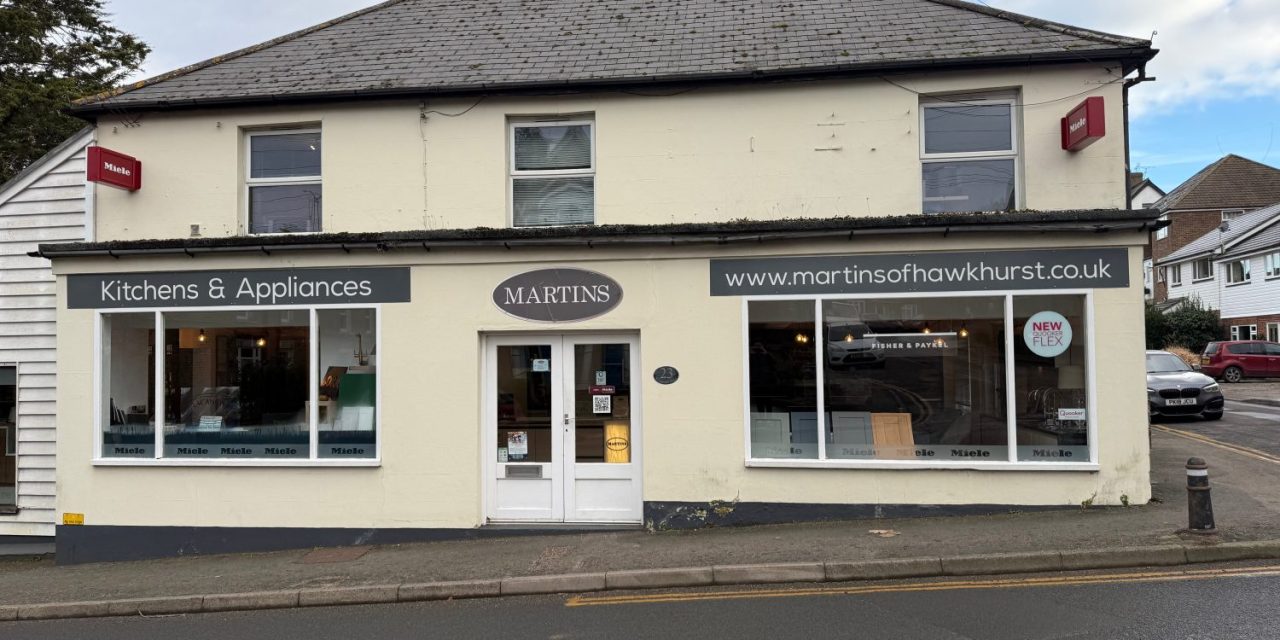
As electrical retail evolves, ERT Award winning Martins of Hawkhurst is meeting the pressures on independent specialists with a focus on customer service. Will McGill visited the retailer and spoke with Director Edward Harringman to discuss market realities, changing customer expectations, and staying relevant in a shifting sector.
For more than five decades, Martins of Hawkhurst has been a familiar name for homeowners, landlords and renters seeking quality kitchens and premium appliances in the High Weald of Kent.
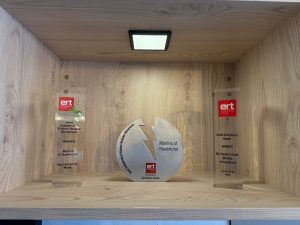
Martins of Hawkhurst took home Best Independent Kitchen Retailer Showroom at the 2025 ERT Awards Sponsored by Miele.
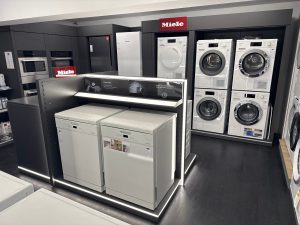
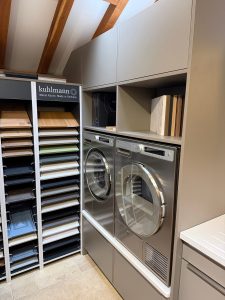
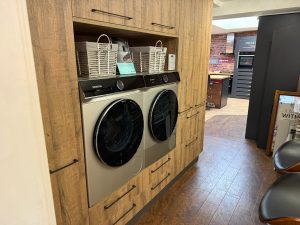
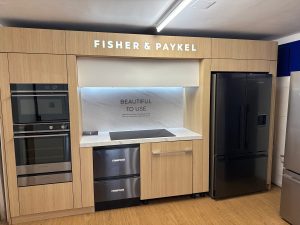
Over time, the business has developed into a hybrid retailer, combining traditional kitchen design with modern electrical retail and offering everything from freestanding washing machines to fully integrated kitchens under one roof, as well as its e-commerce website.
Martins of Hawkhurst has also enjoyed notable recognition at the ERT Awards, winning Best Independent Kitchen Retailer Showroom in both 2025 and 2022. In addition, Bill Radford-Earle was recognised with the Sales Excellence Award in 2024, an accolade now displayed prominently within the showroom.
Edward Harringman, who became Director in March 2025, spent his first months in the role immersing himself in the day-to-day running of the business, gaining an understanding of its history and engaging closely with its established customer base.
“Martins has been around for 53 years now,” he reflects. “There’s a lot of history here, and people perceive us in different ways. Some customers come in for our range of appliances, while others know they can come to us for a high-end kitchen and a complete appliance package.”
That longevity, he explains, has been sustained by a clear focus on the customer.
“The most important thing is really listening to what the customer needs,” Mr Harringman says. “Of course, there’s an element of selling, but much of what we do is advising, helping customers choose the appliance that best suits their lifestyle and identifying which features genuinely matter to them.”
He adds: “We offer a complete range of kitchens and appliances. Someone might come in looking for a dishwasher and leave with a fully designed kitchen, if that’s ultimately what they need.”
Supplier support
Long-standing partnerships with premium brands, particularly Miele, continue to underpin the retailer’s reputation for quality and reliability. Martins of Hawkhurst also hosts official Miele service support, ensuring customers have access to expert advice and comprehensive aftersales care.
“Miele is a really good brand for us,” Mr Harringman says. “We’ve worked with them for years, and the official backing provides reassurance for customers, particularly when it comes to aftersales support.”
This hands-on approach has helped foster loyalty across generations, with many families returning to the retailer for successive kitchen and appliance purchases.
Although Mr Harringman is relatively new to the electrical retail side of the business, he brings with him extensive experience in business and craftsmanship. Having previously worked as a cabinet maker and in oak framing, he has first-hand knowledge of bespoke kitchen construction.
“I knew the kitchen industry from my previous work, but appliances are new to me,” he admits.
Support from John Martin, the company’s General Manager, and Scott, a long-serving member of the team, has helped him navigate the nuances of the sector.
“I’m learning all the time from people who’ve been here for decades. That mix of a fresh perspective and deep experience is really powerful.”
Stronger together
As a member of the Euronics buying group, Mr Harringman highlights the role the group has had in supporting both the practical and strategic sides of the business. He points to the value of drawing on a wider network of independent retailers facing similar challenges.
“The regional meet-ups have been really helpful,” he says. “You get to meet other local retailers and have very open conversations about how things are going, what’s working and what isn’t.”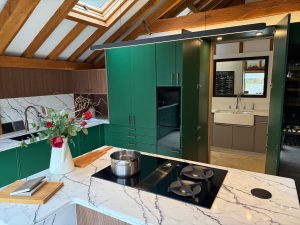
He notes that this exchange of insight has been particularly useful during a period of wider market uncertainty. With trading conditions proving challenging across the sector over the past year, the ability to benchmark experiences has provided important context.
“It’s been quite a tough year generally, and people are very open about that,” he explains. “Hearing that others are dealing with the same issues helps you understand what’s specific to your own business and what’s happening across the market more broadly.”
Despite operating in overlapping territories, Mr Harringman suggests there is little sense of direct competition between independents. Instead, he describes a pragmatic understanding shaped by geography and service capability.
“We all know the areas we can realistically cover well, so we direct customers to other retailers and they do the same for us,” he says.
That cooperative mindset extends beyond informal discussions. Mr Harringman believes there is real strength in the collective position buying groups such as Euronics offer, particularly when competing against national chains and online-only retailers.
“The real competition isn’t other independents,” he says. “It’s the national players. That’s where the pressure is, and that’s why it’s important independents work together.”
While still developing his own industry network, Mr Harringman says access to experienced retailers and shared knowledge has helped shorten the learning curve. In a market where pricing, logistics and supplier relationships are increasingly complex, and not to mention changing, that collective insight has a practical value.
 “There’s a lot of information flowing through the industry all the time,” he says. “Being part of a group like that means you’re not trying to work everything out on your own.
“It’s also been a significant advantage having John and a team with decades of industry experience to learn from.”
Modernising
Since taking the helm, Mr Harringman has focused on modernising the business’ branding and digital presence while retaining the qualities that have driven its long-term success. Two separate websites, one dedicated to kitchens and one to e-commerce, are currently being streamlined to improve the customer journey.
“Our e-commerce platform needs to reduce the number of steps a customer takes to find and purchase a product,” he explains. “Competitors are becoming slicker online, and we need to keep pace, but always in a way that complements our high-touch service model.”
He stresses that relationships remain central to the business.
“People like buying from us because they trust us and know we’ll go the extra mile.”
That ethos is reflected across the operation, from site surveys for large appliances to the coordination of delivery and installation. The retailer’s approach to warranties and repairs is a key part of that service proposition. With Miele, for example, Martins of Hawkhurst manages repairs and replacements directly.
“If something goes wrong with a Miele appliance, we handle it,” Mr Harringman says. “Customers don’t have to wait on central support; they come straight to us. That level of support builds confidence and loyalty.”
The appliance market, he observes, remains competitive but relatively stable, driven by product lifespans and consistent replacement demand.
“Even when sales dip, people still need replacements,” he says. “Our focus is on capturing that demand, particularly at the higher end, where service and expertise really matter.”
Martins’ appliance offering covers cooking, refrigeration, dishwashing and laundry, combining premium German and Italian brands with careful consideration of customer requirements.
AI’s advantages
Mr Harringman also sees technology – particularly artificial intelligence – as an area with long-term potential.
“AI could help specify appliances based on household needs,” he suggests. “You could input family size, laundry habits and kitchen layout, and AI could recommend suitable options. Over time, it could even complete the purchase, making e-commerce more seamless.”
However, he is clear that technology should complement, rather than replace, human expertise.
“Our value is in guiding customers through complex decisions,” he says. “AI can assist, but it won’t replace the detailed advice our team provides, especially for integrated kitchens or premium appliances.”
Marketing and growth remain key priorities. Mr Harringman is overseeing a rebranding initiative that includes a refreshed logo, website updates and improved digital engagement through email and social media.
“We’re refining our approach rather than overhauling it,” he explains. “The brand has a strong reputation, and our aim is to keep it feeling current while maintaining the trust customers expect.
 “We focus on the areas we can serve best. Our knowledge of local roads, which can be challenging for large delivery vehicles, logistics and customer needs gives us an advantage over national retailers like AO or John Lewis.
“I’ve always found that if I have a question, there’s someone willing to offer advice.”
Quality service
Mr Harringman is particularly aware of how customers approach appliance purchases where integration or complexity is involved. While price often drives online sales of entry-level products, reassurance becomes more important when installation, specifications or longevity are key factors.
“People don’t just buy a washing machine,” he says. “They buy confidence that it will work in their home. Once you’re dealing with built-in appliances or kitchens where everything has to align, the detail really matters.”
That attention to detail, he believes, remains a point of differentiation for independents as buying habits continue to evolve online. Factors such as physical fit, integration with cabinetry and suitability for everyday use are not always easily conveyed through a product page.
At the same time, he is clear that history alone does not guarantee relevance.
“We’ve got a long history, and that’s important,” he says. “But the way people shop is changing, kitchen technology is evolving, and how we communicate with customers has to change as well.”
This thinking has informed a programme of gradual refinement rather than dramatic change. Current priorities include improving marketing activity, strengthening digital platforms and clarifying the business’ proposition, while remaining focused on its existing catchment area.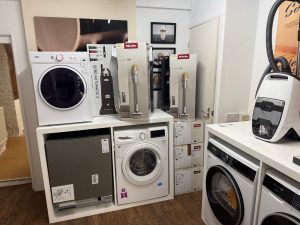
“We’re not trying to reinvent the wheel,” Mr Harringman concludes. “It’s about keeping pace, making sure our websites work properly, our messaging is clear, and customers understand what we actually offer.
“A lot of what we do is about solving problems,” he adds. “Whether it’s checking something will fit or helping someone choose between two options, the satisfaction comes from knowing you’ve helped them make a decision they’re comfortable with.
“We’ve got a long history. What I’m doing is building on that and making sure it still works for how people want to buy today.”
Stay ahead in the Electrical Retail Industry
Never miss a beat in the world of electrical retail. Subscribe to our weekly newsletter for the latest industry news, insights, and trends – delivered straight to your inbox. Plus, receive ERT Magazine 10 times a year, bringing you the latest analysis, insights, and inspiration from across the industry.
Subscribe now: https://ertonline.co.uk/
