
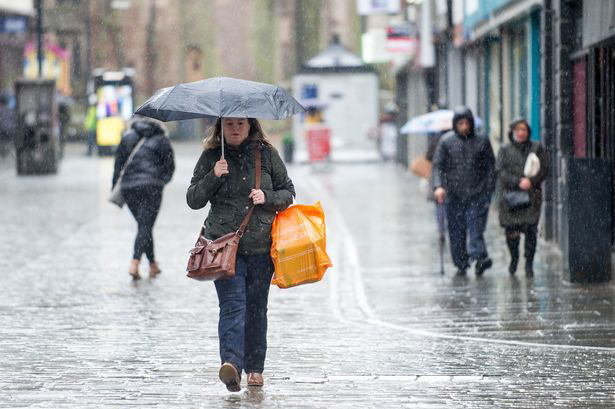
UK retail had a very tough 2023 which was caused by no growth in the economy, customers impacted by a cost of living crisis, recruitment struggles, high staffing costs, political uncertainty and a trading landscape changed by the pandemic.
Members of the Retail Think Tank (RTT) shared their predictions and insights for the year ahead in the RTT 2024 Outlook – here are some of its highlights.
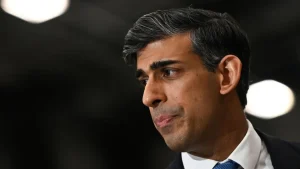
Credit: PA Media.
Charles Burton, Director at Oxford Economics, said: “We think three key themes will shape the outlook this year, with the economy treading water as it moves from dealing with one shock to another. While the inflation shock is receding, both fiscal and monetary policy will hold the economy back in 2024.
“The Government has little room for manoeuvre on tax cuts and with more borrowers being forced to refinance their mortgages at much higher rates, the impact of past monetary tightening will continue to build. There is light at the end of the tunnel, however, as real wages should continue to recover in 2024 and as interest rates start to fall in the latter part of the year.”
Positives in 2024
Despite the UK currently being in an economic downturn, history has taught us that we often experience an upturn and what you, the retailer, should be asking yourself is: am I in a position to benefit from it when it happens?
New growth models, such as retail media, which have been adopted by the likes of Currys, Tesco and, home improvement company, Kingfisher, may already be paying off.
Retail media is a form of marketing that targets consumers at or near their point of purchase. It includes techniques such as in-store advertising, online advertising, sampling, loyalty cards, coupons or vouchers.
Retailers can also benefit from hybrid marketplaces where retailers sell their own brand and third party goods, subscription retail, and platform business models – the likes of which have been implemented by NEXT and M&S.
And now for the bad news…
The RTT predicts that economic policy will remain a “dead weight” on the UK economy and retail businesses, and the impacts affecting household costs will rise as more people refix their mortgages and consumers’ spending power will decrease.
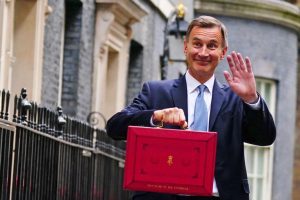
Credit: PA Wire
The National Minimum Wage will rise again in April, which is a good thing for consumers’ disposable income but it is also a significant cost to retailers.
It is also likely that we will continue to see big disparities between the winning and losing categories, often those described as “essential” and “non-essential”.
James Sawley, Head of Retail and Leisure at HSBC UK, explained: “The market has experienced an increase in administrations, signifying that the going is tough for small family-run businesses, SMEs and independent retailers as, when compared to previous years, there have been fewer big name failures in 2023.”
He predicted that throughout the whole of 2024, the cost of servicing loans are likely to remain high.
All of this is not helped by a slow housing market, and with the pandemic boom for “big-ticket” items and technology delaying the replacement cycle, will make it more competitive.
Predictions for the future
The think tank also predicts that the trend of businesses moving away from the high street and into retail parks is likely to continue.
Jonathan De Mello, Founder & CEO, JDM Retail, added: “For the likes of Next and M&S, which have been trading on retail parks for some time, their stores are among their best performing. With a broadening of the offer away from just bulky goods, and more food and beverage operators seeking to trade on retail parks, they are increasingly providing a real alternative to high streets.”

The group predicts that solutions are unlikely to be found in order to support the high street but discussions are under way in the House of Lords, through its Built Environment Committee – read more about it here.
However, it does predict there to be light at the end of the tunnel. By the end of the year it expects inflation to close up to the two per cent target again and we could see further temporary fiscal loosening in the run-up to the general election that has to be held before January 2025.
