
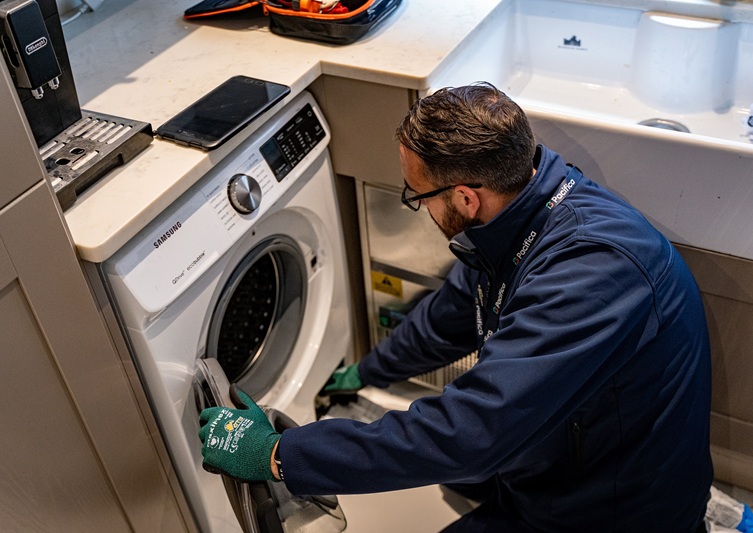
A new Freedom of Information (FOI) request to 61 UK local authorities, with findings collated by domestic appliance repairs and extended warranties specialist, Pacifica, has revealed that the volume of domestic white goods being disposed of has continued to rise despite the introduction of the 2021 Right to Repair Act.
The findings show that in 2020, councils processed 198,450 tonnes of white goods. By 2024, this had risen to 242,310 tonnes, an overall increase of 22 per cent in just four years. (Year-on-year numbers below)
The 2021 Act was designed to extend the lifespan of household appliances by giving consumers and repairers better access to spare parts and information. However, the latest data suggests that rather than reducing waste, the volume of discarded fridges, freezers, washing machines, tumble dryers, and dishwashers has grown year on year since the legislation came into force.
One positive from the data is a significant reduction in the volume of white goods being sent to landfill. In 2020, a notable proportion of items collected still ended up in landfill, but by 2024 nearly half of councils (47 per cent) reported that no white goods were sent to landfill at all. This suggests that while disposals remain high, recycling rates are improving, and fewer appliances are being wasted.
In addition, from Pacifica’s perspective, there are encouraging signs that consumer behaviour is beginning to shift. The company, which delivers warranty repairs and extended warranty services on behalf of major manufacturers, has seen the number of repairs it carries out increase year on year since 2021, now exceeding 400,000 appliances annually.
This reflects a growing awareness of repair culture and an appetite among consumers to seek alternatives to simply replacing products, an essential change if the Right to Repair Act is to deliver on its promise and ultimately reverse the waste trends highlighted by councils.
Kevin Brown, Chief Executive of Pacifica, said: “The Right to Repair Act was a step in the right direction, but our findings show that it has not yet delivered the behavioural change policymakers hoped for.
“White goods disposals are still increasing, placing huge pressure on local authorities, but the reduction in landfill is proof that positive change is possible. If repair culture continues to grow, we believe the UK can reverse this trend and significantly reduce appliance waste.
“From a Pacifica perspective, we are also seeing encouraging signs. Repairs undertaken by our engineers have increased year-on-year to more than 400,000 annually, showing that consumers are increasingly aware of repair culture and are choosing alternatives to replacing their products.
“Combined with the fact that fewer white goods are going to landfill, there are signs of a gradual shift in behaviour, and if the Right to Repair Act is to achieve its full potential, this is the direction of travel that must accelerate.”
For more Pacifica news, click here
