
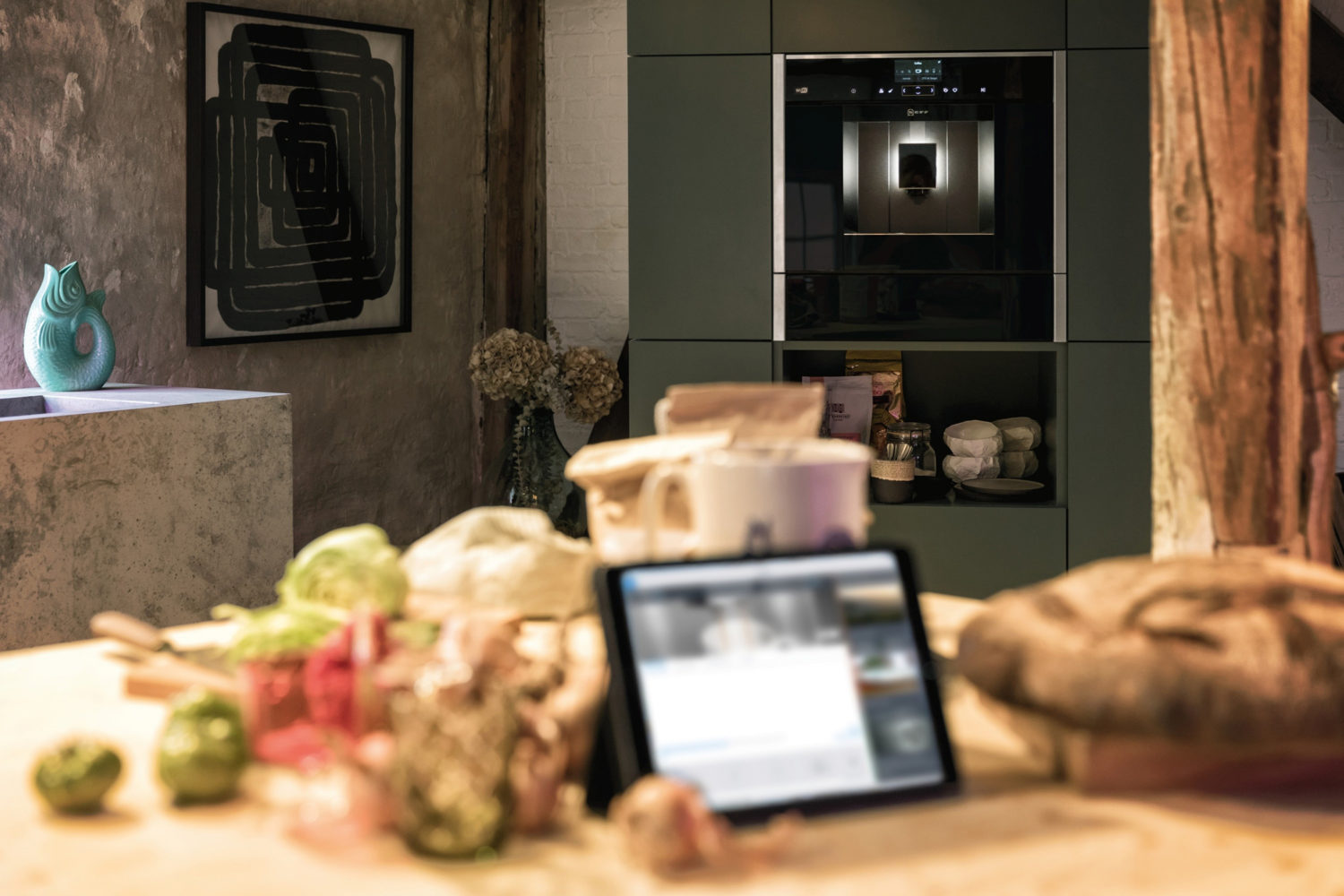
 Each year, more and more appliances get the Smart upgrade whether that’s in MDA form or SDAs such as kettles, toasters and even a blender. It is the new norm. For the most part, we get a glimpse of futuristic kitchen appliances at CES which tends to showcase the more niche side to the higher-end appliances.
It’s apparent that the idea of having a Smart kitchen is becoming an idea people are increasingly warming to.
Brands such as Hisense, are driving this trend with their range of domestic appliances featuring products that are nearly all connected. However, on top of most devices/appliances becoming wi-fi connected, there’s now an increasing need for them all to be driven by AI which opens up the possibilities, as shown with Samsung’s latest Fridge with built-in AI Vision Inside which can tell you what meals you can make from what’s inside your fridge. This isn’t an entirely new concept but things don’t stop there. If you have one of Samsung’s latest AI-enabled ovens it will also connect and sync up with your fridge and start preheating based on what recipe the fridge has selected based on what ingredients you have in the fridge. Taking AI and developing the concept with real-world consumer benefits at heart is when people will start to sit up and take notes.
Most consumers are smart and in some cases smarter than the appliances being sold to us, if it is an AI toaster we are all clever enough to know it’s not because it is a toaster and whilst it may have some very fancy and innovative features like setting the colour of our toast or bagels, it’s a far stretch from the reality of AI and the version of AI we should all be taking seriously. The reality is that much of what we use has now been designed using AI in the process and when real AI is embedded into the product, the advantages are huge not only in user running costs, creating smarter washes or drying cycles but also putting the user in even more control beyond what a dumb appliance or simple smart enable device offer in terms of control, value, ecology and functionality.
Market Drivers:
It is clear that the market is experiencing a period of rapid growth and transformation, driven by advancements in technology, increasing consumer demand for convenience and efficiency, and a growing awareness of sustainability. Several factors are contributing to this surge in popularity of connected appliances in the UK:
Rising Energy Costs: With energy prices soaring, consumers are increasingly seeking ways to reduce their consumption and save money. Smart appliances, with their energy monitoring and optimisation features, offer a compelling solution. Appliances are becoming increasingly adept at optimising energy consumption. Smart washing machines can adjust water and energy usage based on the load, while smart refrigerators can optimise cooling cycles to minimise energy waste.
Convenience and Automation: Busy lifestyles are driving demand for appliances that can automate tasks and be controlled remotely. Connected appliances offer unparalleled convenience, allowing users to manage their homes from anywhere.
Growing Smart Home Adoption: The rise of smart home ecosystems, with voice assistants like Alexa and Google Assistant at their centre, has paved the way for wider adoption of connected appliances.
Technological Advancements: Continuous innovation in areas like IoT, AI, and machine learning is enabling the development of more sophisticated and user-friendly connected appliances. Leveraging AI to learn user preferences and provide personalised recommendations will ultimately enhance the user experience and become something that buyers will be specifically asking for rather than considering them a novelty.
Other advanced capabilities such as predictive maintenance, where appliances can detect potential issues and alert users or service providers before problems arise, and remote monitoring and control, allowing users to, for example, start cooking dinner on their way home, are all innovations that consumers will start to expect in the near future.
Challenges of course exist in this market. Interoperability, ensuring there is seamless communication and integration between different brands and types of connected appliances remains a challenge. The cost of connected appliances can be a barrier for some consumers. As technology matures and economies of scale increase, prices will become more competitive.
And then there’s consumer education. Many consumers are still unfamiliar with the benefits and features of connected appliances. Effective marketing and in-store education and engagement campaigns are needed from brands to raise awareness and drive adoption.
The future in this category is positive though with the UK connected appliance market poised for continued growth in 2025 and beyond. Driven by consumer demand for convenience, efficiency, and sustainability, manufacturers are developing innovative and user-friendly appliances that are transforming the way we interact with our homes. As technology advances and challenges are addressed, connected appliances are set to become an integral part of modern living, offering a more convenient, efficient, and sustainable lifestyle.